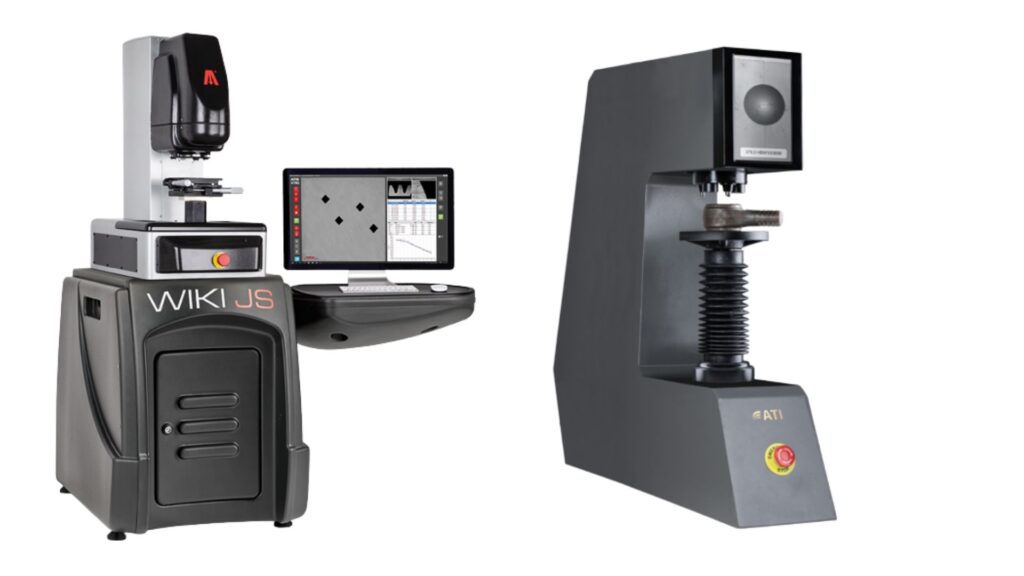
Hardness testing methods – Brinell, Rockwell and Vickers
Hardness testing methods evaluate a material’s resistance to permanent indentation, scratching or abrasion. These methods are used primarily in manufacturing and quality control to predict a material’s tensile strength, verify heat treatment processes and assess wear resistance. The main hardness testing methods differ in the shape of the indenter, the way the indentation is measured and their intended applications.
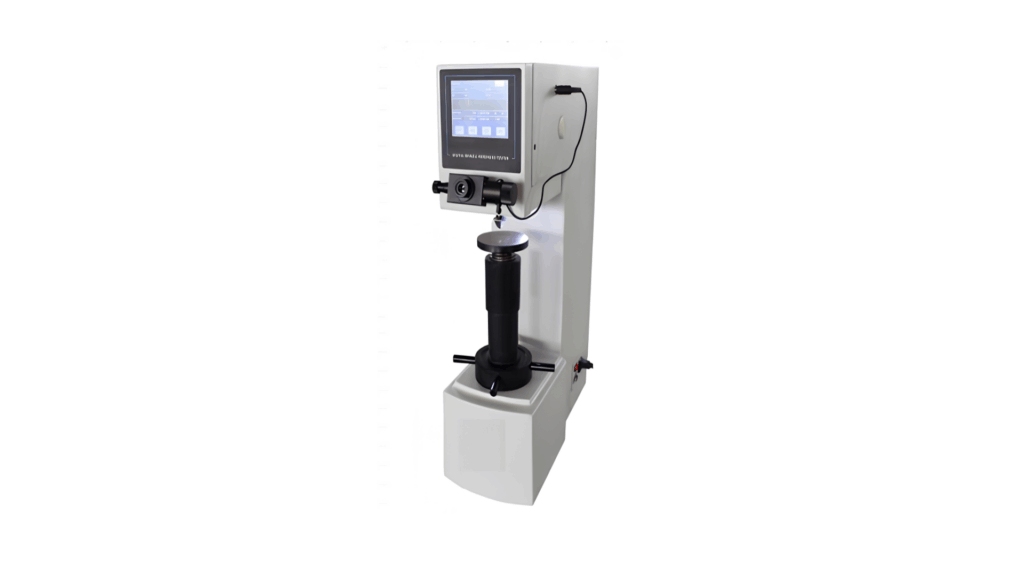
Brinell hardness test
The Brinell hardness test is a standardized experimental method used to measure and compare the hardness of materials, particularly metals and metal alloys. This method is especially well suited for materials with a coarse or non-uniform microstructure, such as cast products.
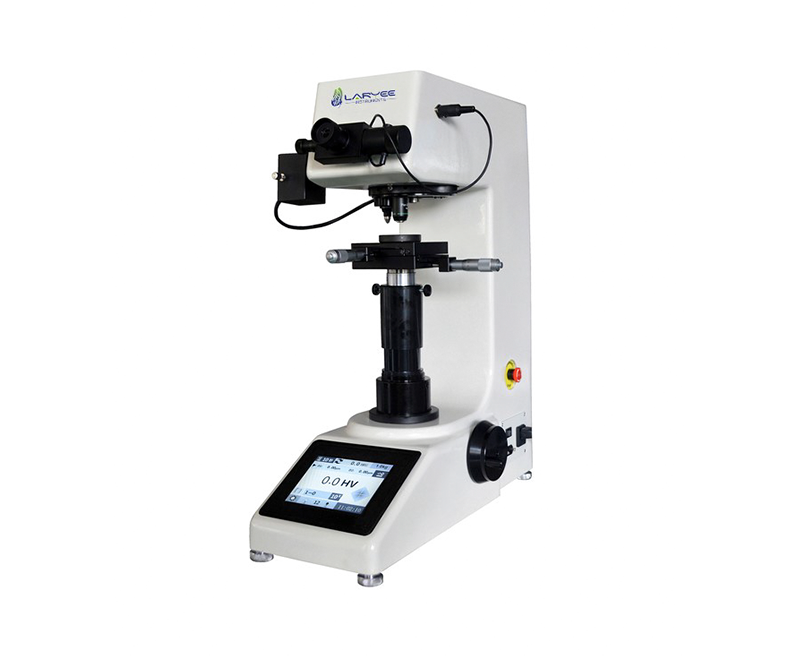
Vickers hardness test
The Vickers hardness test is a widely used method for determining the hardness of materials. Its popularity is based on its versatility and the simplicity of its calculations. The method allows the hardness of a wide range of materials to be measured using the same indenter, making it highly flexible and suitable for many different applications.
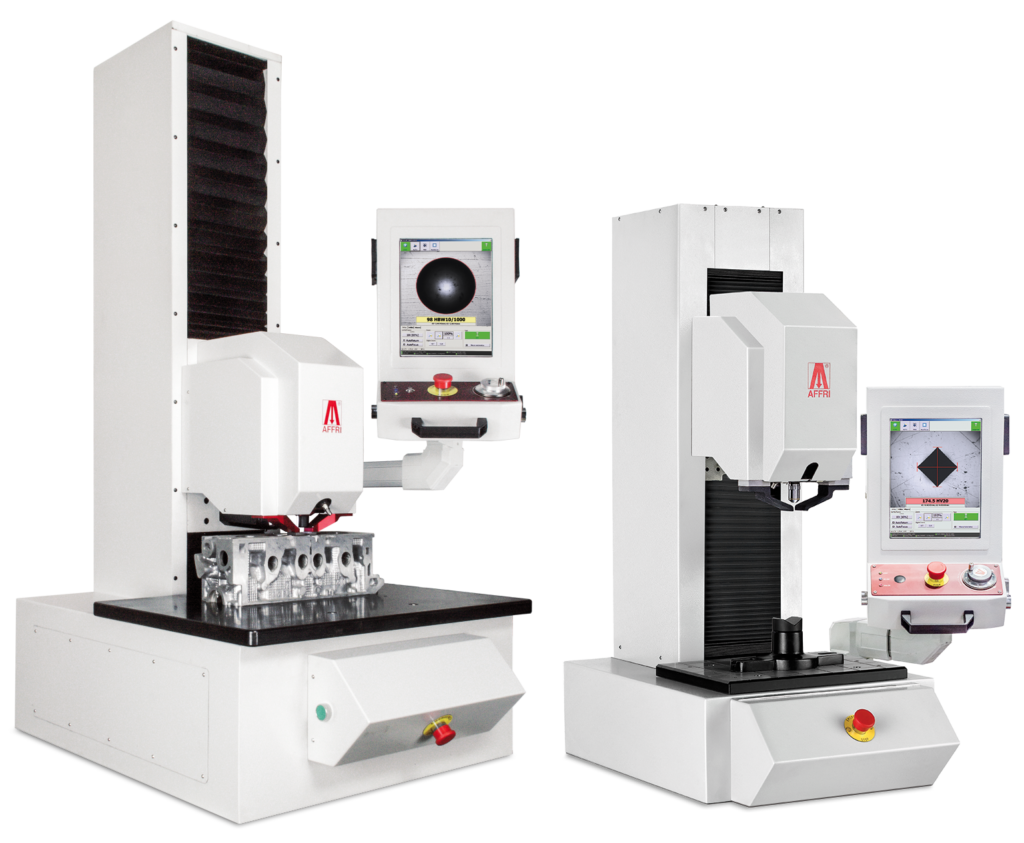
Rockwell hardness test
The Rockwell hardness test is a standardized and widely used method for determining the hardness of materials. The method is based on measuring the depth of penetration of an indenter into a test specimen under specified conditions. Rockwell testing is popular because of its speed, simplicity and reliability.
How do hardness testing methods differ?
The Rockwell and Vickers hardness testing methods differ primarily in their measurement principles, testing speed and typical applications. Rockwell is the standard choice for production and quality control, whereas Vickers is the preferred precision method for laboratory testing and the evaluation of microscopic structures. The Brinell method, in contrast, is best suited for testing coarse-grained materials and thick specimens.
How do the hardness testing systems compare?
Rockwell scale
- Operating principle: An indenter is first pressed into the material using a minor preload, followed by a larger test load. The hardness value is determined from the measured depth of penetration and is read directly from the testing machine without the need for optical measurement.
- Advantages / Disadvantages: The method is very fast, making it well suited for routine production and high-volume quality control. However, it is less suitable for thin specimens, as the relatively deep indentation can reduce measurement accuracy.
Brinell scale
- Operating principle: In the Brinell method, a large spherical indenter is pressed into the material surface under a high load (up to 3,000 kgf). The diameter of the resulting indentation is measured optically and the hardness is calculated from this measurement.
- Advantages / Disadvantages: The large indentation minimizes the effects of surface irregularities and coarse grain structures, making the method ideal for coarse materials such as forgings and cast iron. The main disadvantage is that the large indentation may damage finished components.
Vickers scale
- Operating principle: A pyramid-shaped diamond indenter is pressed into the material, creating a square-shaped indentation. The diagonals of the indentation are measured under a microscope and the hardness value is calculated from these measurements.
- Advantages / Disadvantages: The Vickers method is suitable for measuring the hardness of nearly all metals and provides high accuracy over a wide hardness range. It requires a carefully polished surface and optical measurement of the indentation, making it slower than methods such as Rockwell. It is also particularly well suited for microhardness testing, including the measurement of individual grains and thin coatings.